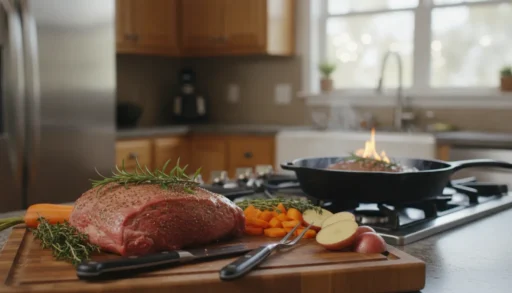
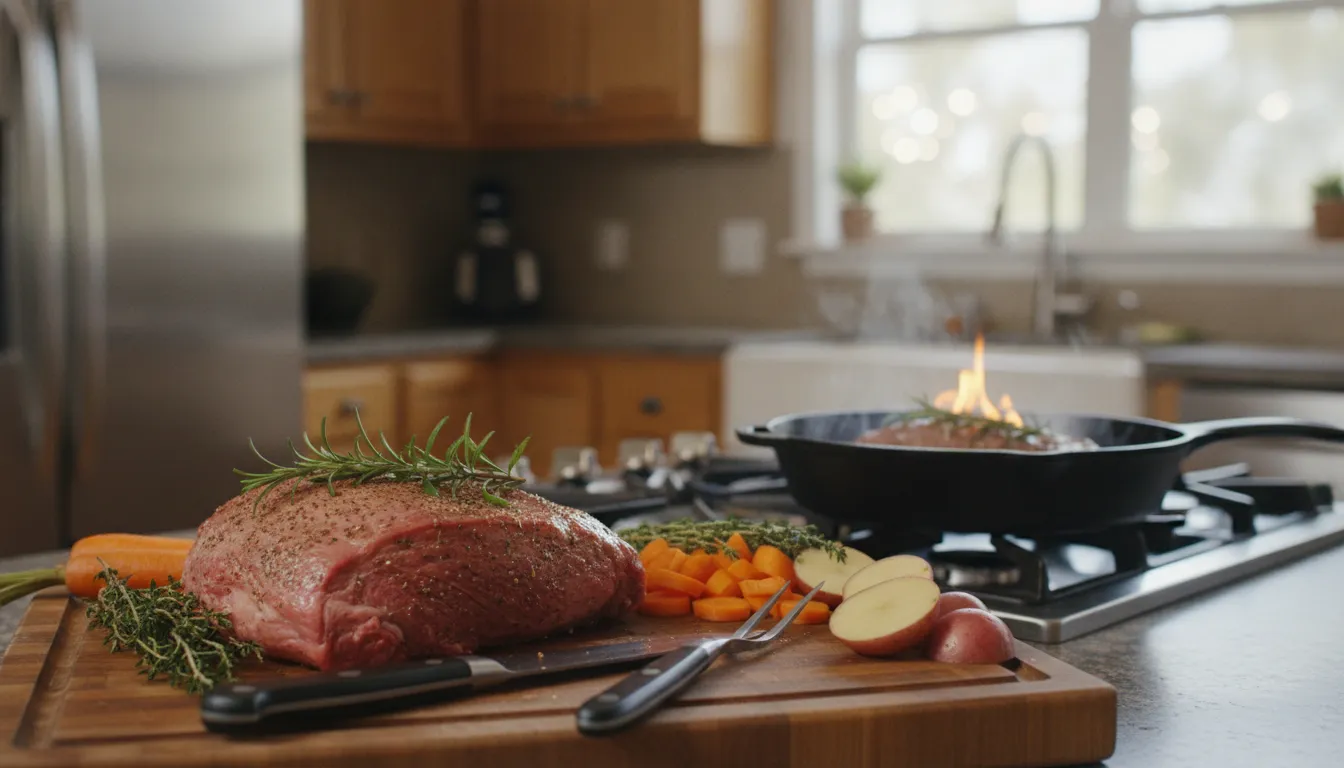

Ever spent a lot on premium beef, only to get a dry, tough meal? It’s a common problem for home cooks aiming for a memorable dinner.
This meat is actually very tasty, but it needs care to shine. You don’t have to be a pro to cook it well at home.
With a good rump roast recipe, you can turn tough meat into tender, juicy perfection. This guide will teach you how to cook a rump roast perfectly. Get ready to improve your cooking and wow your guests.
Understanding the Beef Rump Roast
The beef rump roast is a key part of American comfort food. It comes from the cow’s hindquarters, where the meat is lean but tender. This is because it has enough connective tissue to become soft when cooked right.
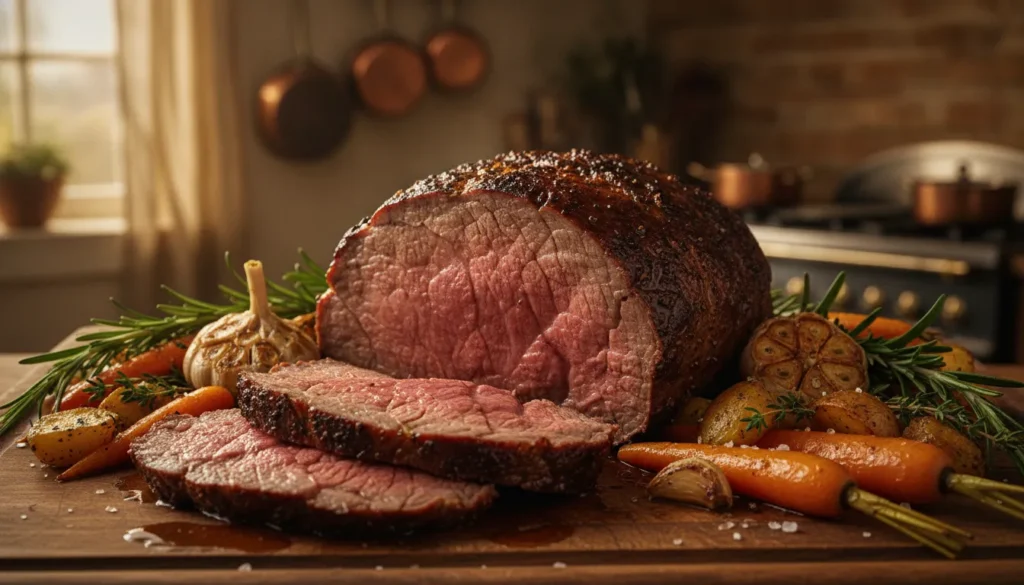
Why Rump Roast is a Culinary Favorite
Many home cooks pick this cut for its deep, savory flavor. A rump roast roast beef makes a hearty meal that’s easy on the wallet. It’s great for both the oven and slow cooker.
When looking for the best what type of roast for pot roast, rump roast is a top choice. It keeps its shape well, soaking up flavors and staying moist.
Comparing Rump Roast to Chuck Roast and Sirloin
Choosing the right cut depends on your cooking goals. Rump roast is leaner than chuck roast. If you’re looking for a chuck roast substitute, rump roast offers a cleaner slice.
| Cut Type | Fat Content | Best Cooking Method | Texture |
|---|---|---|---|
| Beef Rump Roast | Low | Slow Cooker/Oven | Firm and Lean |
| Chuck Roast | High | Braising | Very Tender |
| Sirloin Roast | Moderate | Roasting | Tender |
Knowing the differences helps you plan meals with confidence. Whether you want tenderness or a leaner slice, understanding these cuts is key. Now, you can plan your next grocery trip with ease.
Essential Tools and Equipment for Success
Getting your kitchen ready is key to mastering beef roasting. The right tools help manage heat and track your cooking. Quality gear means you get top-notch results every time.
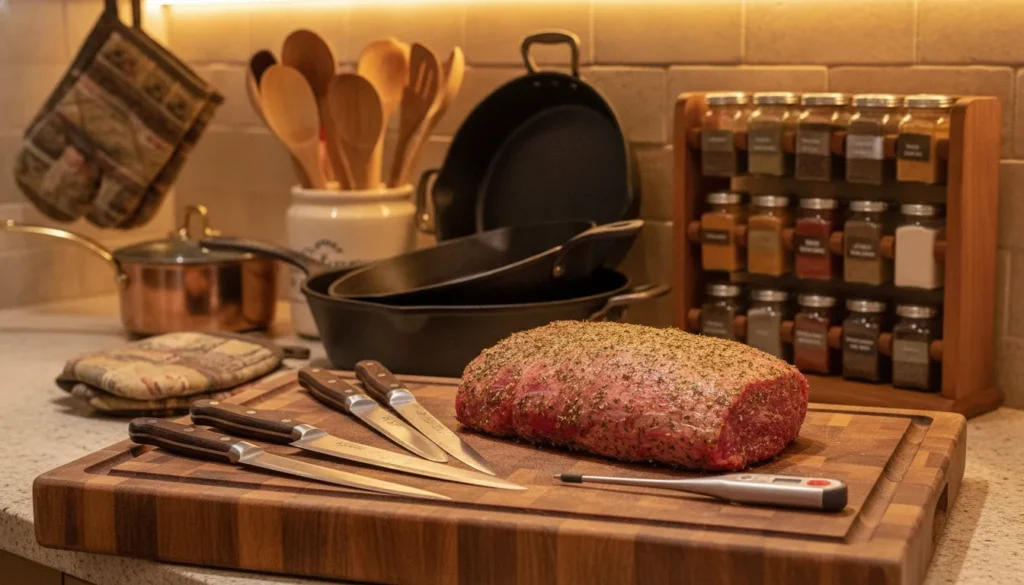
Choosing the Right Roasting Pan or Slow Cooker
Picking the right pot is crucial for even heat. For a slow cooker rump roast, go for a heavy ceramic insert. A tight lid keeps moisture in, making the meat tender.
For oven roasting, stainless steel or cast iron pans are best. They distribute heat well, avoiding dry meat. Make sure your pan is big enough for air to circulate.
The Importance of a Reliable Meat Thermometer
A digital meat thermometer is essential for how to cook a rump roast. It’s better than relying on looks or cooking times. A probe thermometer lets you check the meat’s internal temperature accurately.
Safety and texture depend on the right temperature. A good thermometer gives quick readings, keeping your slow cooker rump roast juicy.
| Equipment Type | Best Use Case | Key Advantage |
|---|---|---|
| Cast Iron Pan | Oven Roasting | Superior Heat Retention |
| Slow Cooker | Braised Dishes | Hands-off Convenience |
| Digital Thermometer | All Methods | Precision Temperature Control |
| Stainless Steel Pan | Searing & Roasting | Durability & Versatility |
Selecting the Best Cut of Meat
Your success in the kitchen starts before you turn on the oven. Picking the right beef rump roast is key to a tender and tasty dish. Knowing how to cook a beef rump roast begins with finding top-quality meat at the butcher.
Identifying Quality Marbling and Color
Look for white fat flecks in the meat, called marbling. This fat melts while cooking, making the meat super tender. Stay away from dull or gray meat, as a bright red color means it’s fresh.
Beef tenderloin steaks are lean, but rump roast needs more fat to stay juicy. Compared to roasted beef sirloin, rump roast tastes beefier. Choose a piece that’s even in thickness for even cooking.
Determining the Right Size for Your Needs
Decide on the right weight based on how many people you’re hosting and if you want leftovers. A good rule is half a pound of raw meat per person. For big groups, add a quarter pound to each person to account for shrinkage.
- Small gatherings: A 3-pound roast is great for family dinners.
- Large events: Go for 5 to 7 pounds to make sure everyone gets enough.
- Leftover planning: Buy an extra pound if you want sandwiches the next day.
Choosing a bigger cut gives you more control over your meal’s texture. A big roast holds heat well, letting you get a beautifully seared crust without overcooking the inside. Always choose quality over price for the best dining experience.
Preparing Your Meat for the Oven or Slow Cooker
Getting a perfect result begins long before you turn on your oven. The secret to a roast is in the preparation. By following simple steps, your meat will soak up heat and flavor evenly.
The Art of Trimming Excess Fat
When preparing a rump roast roast beef, check the outside for thick fat layers. A bit of fat is good, but too much stops seasonings from getting in. Trim off excess fat, leaving a thin layer, about an eighth of an inch.
Why Bringing Meat to Room Temperature Matters
Many cooks skip letting the beef warm up before cooking. This makes the outside overcook while the inside stays cold. Let your roast sit at room temperature for 30 to 60 minutes. This step is crucial for a how to cook a beef rump roast that turns out right.
Seasoning Techniques for Maximum Flavor
After warming up the meat, it’s time to add flavor. Make small slits in the meat to add garlic. This method adds savory flavors from the inside out.
Then, rub the meat with herbs all over. Press the herbs into the meat so they stick during cooking. Learning these seasoning tricks is key to a how to cook a beef rump roast that wows your guests.
The Ultimate Oven Roasted Rump Roast Method
Getting a restaurant-quality meal at home starts with mastering the oven roasted rump roast. Many home cooks worry about overcooking lean cuts. But, with a systematic approach, your beef can stay tender and flavorful.
By controlling your environment, you can make a savory rump roast that’s as good as any steakhouse dinner.
Setting the Ideal Oven Temperature
Consistency is key for a great roast. For most beef cuts, like a roasted beef sirloin or rump, use 325°F. This temperature lets the heat get to the center slowly, without drying out the outside.
Don’t try to cook it faster by using high heat. High temperatures can make the meat cook unevenly and become tough. Keeping your oven at 325°F ensures even cooking from edge to center.
Searing the Meat for a Savory Crust
Before putting the meat in the oven, you need to create a flavorful crust. Searing the beef in a hot cast-iron skillet starts the Maillard reaction. This reaction makes a deep, complex crust.
Make sure the meat is dry before searing. Moisture stops a good sear, leading to steam instead of crust. Use a high-smoke point oil and sear each side for about two to three minutes until it’s dark brown.
Calculating Cooking Time per Pound
To get your meat just right, calculate cooking time based on its weight. While a meat thermometer is best, a time-per-pound guide is a good starting point.
| Doneness Level | Internal Temp (°F) | Time per Pound (min) |
|---|---|---|
| Rare | 120°F – 125°F | 15 – 18 |
| Medium-Rare | 130°F – 135°F | 18 – 20 |
| Medium | 140°F – 145°F | 20 – 22 |
Remember, the roast will keep cooking a bit after you take it out of the oven. Always pull the meat when it’s about five degrees below your target temperature. This trick keeps your savory rump roast tender and perfectly cooked every time.
Mastering the Slow Cooker Rump Roast
Using a slow cooker turns tough beef into a melt-in-your-mouth dish. It’s great for a hearty meal after a long day. A slow cooker rump roast makes even lean cuts tender and tasty.
Layering Aromatics and Vegetables
Start with a layer of veggies like carrots, celery, and onions at the bottom. They act as a rack, keeping the meat above. This helps infuse it with savory flavors.
Add garlic cloves or herbs like rosemary and thyme to this layer. As they heat up, they release juices that make your dish richer.
Managing Liquid Ratios for Juicy Results
It’s key to keep the right moisture level for a juicy rump roast. You don’t need to cover the meat in liquid. .
This liquid keeps the meat moist and lets flavors concentrate. For a thicker sauce, mix in cornstarch or flour before serving. This makes your dish moist and tasty.
Low and Slow Cooking Strategies
Patience is crucial with this meat. Rump roast is lean, making it a great chuck roast substitute. Always cook on low to break down connective tissues slowly.
While some recipes are simple, adding extra aromatics boosts flavor. Cook for at least eight hours for the best tenderness. Consistency is key, so avoid opening the lid too often.
The Perfect Rump Roast Recipe for Every Occasion
Mastering a savory rump roast can elevate your home cooking. A good rump roast recipe is perfect for both casual dinners and formal events. Focus on a few key flavors to ensure a delicious dish every time.
Creating a Signature Herb Rub
The key to a great roast is the seasoning. Mix kosher salt, black pepper, dried rosemary, and minced garlic for a signature rub. This creates a fragrant crust that keeps the meat juicy.
Massage the rub into the beef before cooking. This step is crucial for the best recipes for beef round rump roast. A well-seasoned exterior adds deep flavor to the roast.
Adding Root Vegetables for a Complete Meal
Add root vegetables like carrots, potatoes, and parsnips to the pot. They soak up the juices, making your meal complete and flavorful. This saves time and ensures every part of your dinner is delicious.
| Herb Type | Flavor Profile | Best Pairing |
|---|---|---|
| Thyme | Floral and Subtle | Beef Broth |
| Garlic | Pungent and Bold | Root Vegetables |
By following these steps, you’ll make a savory rump roast that wows your guests. These techniques are great for both beginners and experienced cooks, ensuring a perfect meal every time.
Achieving Tenderness Through Proper Techniques
To turn a tough cut of beef into a tender delight, you need to focus on the right steps after cooking. Learning how to make a tender rump roast is not just about cooking it. It’s about the patience and precision you use in the end.
The Science of Breaking Down Connective Tissue
The rump is a muscle that works hard, so it has lots of collagen. When you cook it, this tough tissue turns into gelatin. This gelatin makes the meat feel succulent in your mouth.
To make this happen, keep the heat low and steady. If you cook too fast, the meat stays tough and chewy, no matter how good it tastes.
Why Resting Your Roast is Non-Negotiable
Resting your roast is crucial for a juicy rump roast. When you take it off the heat, the juices gather in the center. If you cut it right away, these juices will spill out, not stay inside.
Here’s what to do for the best results:
- Put the roast on a warm platter or cutting board.
- Cover it loosely with foil to keep it warm.
- Let it rest for 15 to 20 minutes before slicing.
Slicing Against the Grain for Texture
How you slice the meat is key. You need to cut against the muscle fibers, or grain. This makes each bite easier to chew.
Check out the table below to see how slicing affects your meat:
| Slicing Method | Texture Result | Eating Experience |
|---|---|---|
| With the grain | Stringy and tough | Difficult to chew |
| Against the grain | Tender and soft | Easy to enjoy |
| Diagonal cut | Balanced | Good for presentation |
By using these expert techniques, your juicy rump roast will always be a hit. Mastering these steps is essential for anyone who wants to impress with a how to make a tender rump roast.
Troubleshooting Common Roasting Mistakes
Even the most skilled home cooks sometimes struggle with beef roasts. If your dish doesn’t meet your expectations, don’t worry. Most problems can be fixed with a few tweaks to your method.
Fixing a Dry or Tough Roast
If your meat is too dry, try adding warm beef broth. Simmering the sliced meat in this liquid can add moisture and flavor. Learning how to make a tender rump roast is all about finding the right balance of heat and moisture.
For tougher cuts, consider making a stew or shredded beef. Simmering the meat in a tasty sauce breaks down the tough fibers. This way, you can enjoy every bit of the beef, no matter the first cooking result.
Adjusting for Oven Hot Spots
Uneven cooking can come from hot spots in your oven. To fix this, rotate your roasting pan halfway through cooking. This ensures even heat on all sides of the meat.
When choosing a roast for uneven ovens, a well-marbled rump roast is a good choice. Use an oven thermometer to spot temperature differences. If one side is hotter, place the roasting rack on the cooler side for perfectly even cooking.
Creative Ways to Serve and Store Leftovers
Don’t let your tasty roast go to waste. You can make it into something amazing. Repurposing your cooked beef is a smart way to save time and money. With a bit of creativity, one dinner can become many gourmet meals throughout the week.
Transforming Roast Beef into Gourmet Sandwiches
One great way to use your oven roasted rump roast is in high-end sandwiches. Slice the cold beef thinly and put it on crusty sourdough with horseradish cream and arugula. Adding provolone or gruyère cheese on top makes it even more special.
For a warm treat, try a French dip. Simmer the beef in au jus before putting it on a toasted baguette. This keeps the meat incredibly tender and full of flavor.
Proper Storage and Reheating Tips
Storing leftovers right is key to keeping your beef fresh. Always put leftovers in an airtight container within two hours of cooking. This helps keep moisture in, just like with beef tenderloin steaks.
When reheating, skip the microwave. Instead, heat the beef slowly in a pan with some broth or in a low oven. This method keeps the meat tender and prevents it from getting tough.
| Storage Method | Ideal Duration | Reheating Tip |
|---|---|---|
| Refrigerator | 3 to 4 Days | Use low heat with broth |
| Freezer | Up to 2 Months | Thaw in fridge overnight |
| Vacuum Seal | Up to 3 Months | Sous-vide or gentle steam |
Conclusion
Cooking a perfect meal at home is very rewarding. You now know how to make a simple cut of meat into a special dish. This dish will bring everyone together at the table.
There are many recipes for beef round rump roast to try. You can mix and match herbs and spices to keep your meals interesting. This way, you can always find something new to enjoy.
On busy weeknights, a 3 ingredient slow cooker pot roast is a great choice. It’s quick but still gives you a delicious, homemade meal. This shows that you don’t need to spend hours cooking to have a great dinner.
By focusing on resting times and slicing techniques, you make sure every bite is tender. Keep working on these skills to make your roasts even better. Share your favorite recipes with friends to make them happy too.